

- Home
- Who We Are
- Products
-
Brands
-
Products by Measure
- Vibration Analyzers
- Peristaltic Pumps
- Airflow
- CO Carbon Monoxide
- Geiger counters
- Destiladores
- Spectrophotometry
- Sterilization
- Fluorescence
- GEOTECHNICS
- Soil Moisture
- Leaf area index
- Rain Gauge
- Meteorology
- Water Level
- O2 Oxygen
- pH
- Differential Pressure
- Radiation
- Salinity/Conductivity
- Telemetry
- Air Speed
- Relative Humidity
- Veterinary
- FUEL CELL HARDWARE
- Network Analyzers
- Calibrators
- WATER FLOW
- Color / Colorimeter
- Particle Counters
- Wind Direction
- Spectrometry
- Evapotranspiration
- Photosynthesis
- Cracks in Buildings
- Pipes Inspection
- Quantum Light
- Movement & GPS
- Diesel Level
- Oxígeno Disuelto DO
- Atmospheric Pressure
- Radon
- Sap/Sap Flow
- Temperature
- AIR QUALITY
- Ammonia
- Chlorophyll
- Conductivity in Soil
- Dendrometers
- Electrochemistry
- Spectroradiometry
- Pharmacy & Medicine
- GAS (ANALYZERS)
- Leaf Wetness
- Idc (DC Current)
- KW & KW/H
- PAR Light
- Nitrate
- Occupation and Time
- Particle Meters
- Soil Water Potential
- Pulses
- Flavor/Taste/Acidity
- Sodium
- Turbidity
- VOC
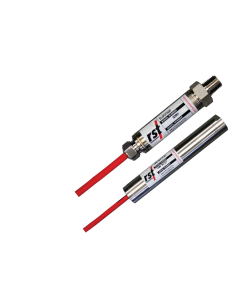
VWIE-RST vibrating wire inline extensometer
Vibrating wire inline extensometer for measuring stability and movement behavior of soil, rock, and concrete structures inside a borehole at defined depths relative to a reference point.
Overview
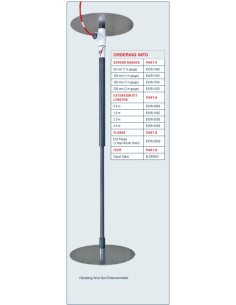
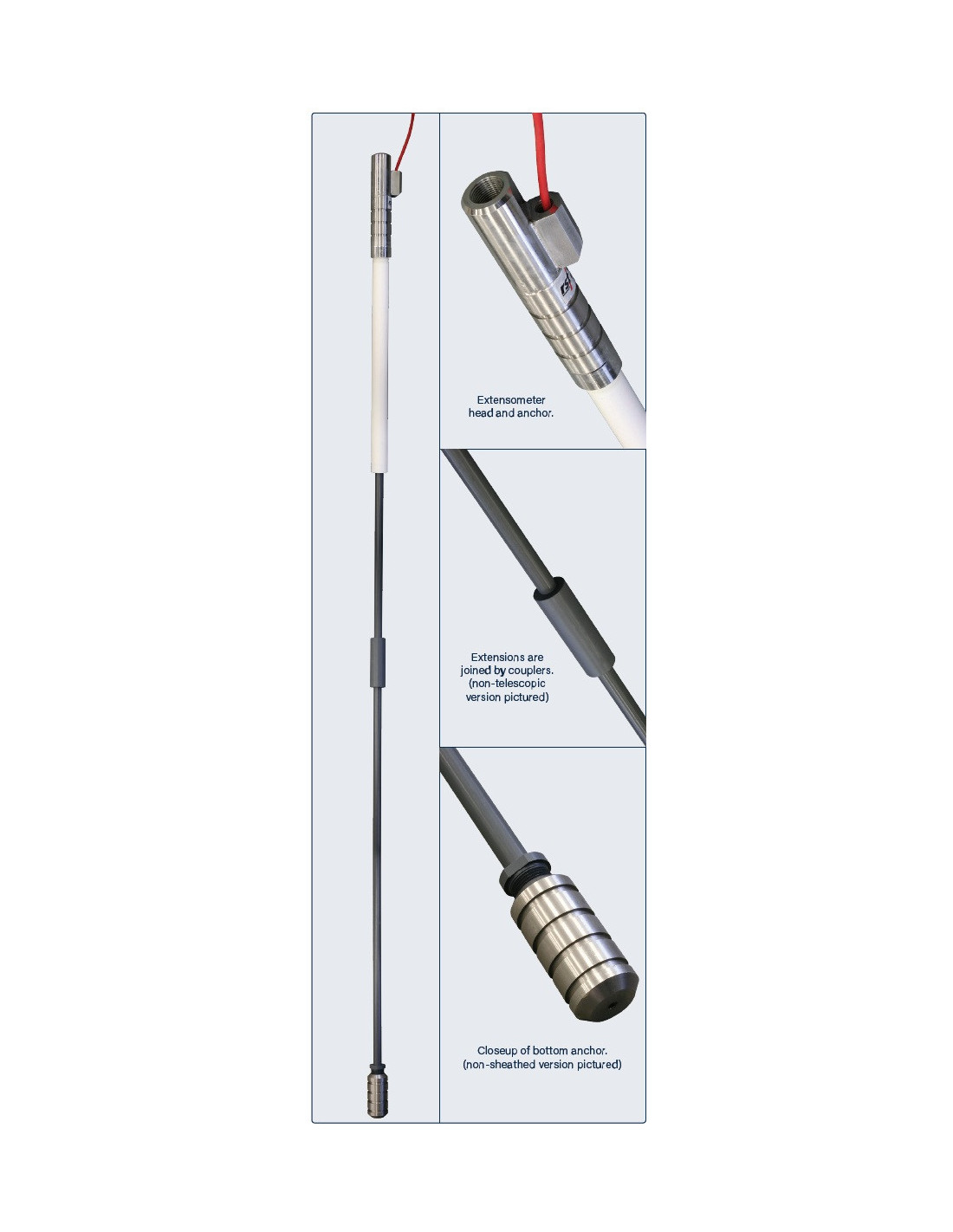
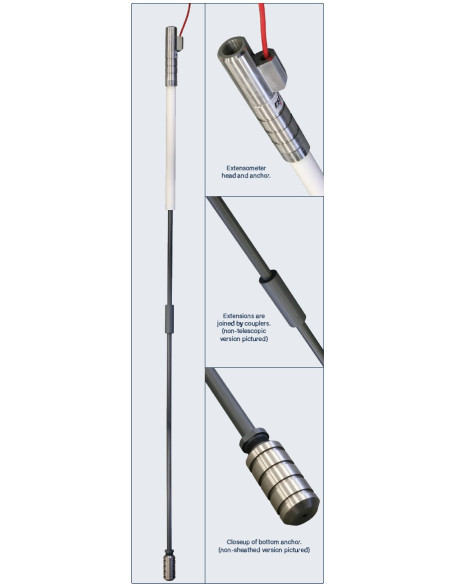
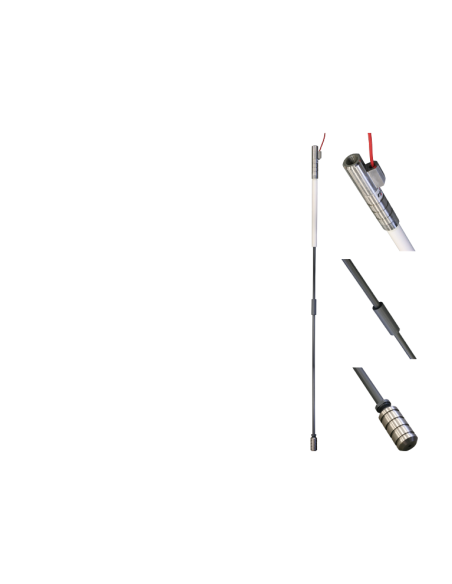
The Vibrating Wire Inline Extensometer is used to determine the stability and movement behavior of soil, rock, and concrete structures inside a borehole at desired depths or elevations relative to a reference point. Its main advantage over conventional multi-point borehole extensometers is that no electrical head protrudes from the borehole.
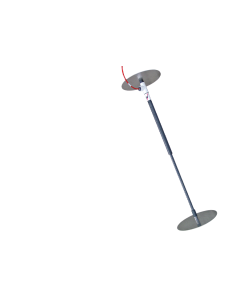
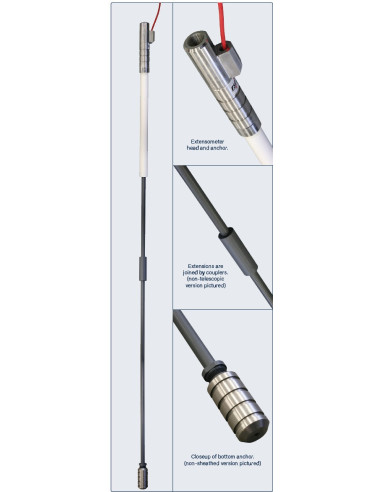
The system sits flush with the borehole collar or ground surface and measures movement at multiple depths relative to a designated reference point. All displacement transducers are housed within sealed head and anchor assemblies installed inside the borehole, separated by extension kits of varying lengths according to the required measurement depths.
Architecture and operation
The extension sections use rigid 3/8-inch stainless steel rods protected by a 1/2-inch SCH40 PVC sheath. The larger rod diameter, compared with the 1/4-inch rods commonly used in conventional MPBX systems, provides improved accuracy for both extension and compression movement measurement.
Because all displacement transducers are installed in series, the total measurement range of the extensometer equals the sum of the individual transducer ranges. This allows significantly larger movements to be measured than with a conventional MPBX while using lower-cost standard-range transducers.
Operational advantages
- Flush-to-surface installation with no protruding electrical head.
- Can be used as a single-point or multi-point measurement system.
- Suitable for small and large extension and compression movements.
- Can be installed in smaller boreholes than a conventional MPBX.
- Rigid 3/8-inch stainless steel inner rod improves displacement accuracy.
Applications
It is intended for civil infrastructure, energy, surface mining, underground mining, and other geotechnical monitoring projects where internal deformation must be tracked without protruding surface hardware.
Product features
- Flush with surface, with no protruding electrical head.
- Usable as a single-point or multi-point measurement system.
- Suitable for small and large extension and compression movements.
- Installable in smaller boreholes than a conventional MPBX.
- Rigid 3/8-inch stainless steel inner rod for improved accuracy.
Specifications
- Sensor ranges: 50, 100, 150, and 200 mm. Other ranges available on request.
- Accuracy: ±0.1% FS.
- Resolution: 0.025% FS.
- Linearity: less than 0.5% FS.
- Thermal zero shift: less than 0.05% FSR/C.
- Operating temperature: -20 C to 80 C.
- Minimum borehole diameter: 75 mm.
- Signal cable: two twisted pairs with polyurethane jacket, one cable per measurement point.