Shopping Cart



Instruments for Geophysics and Seismology

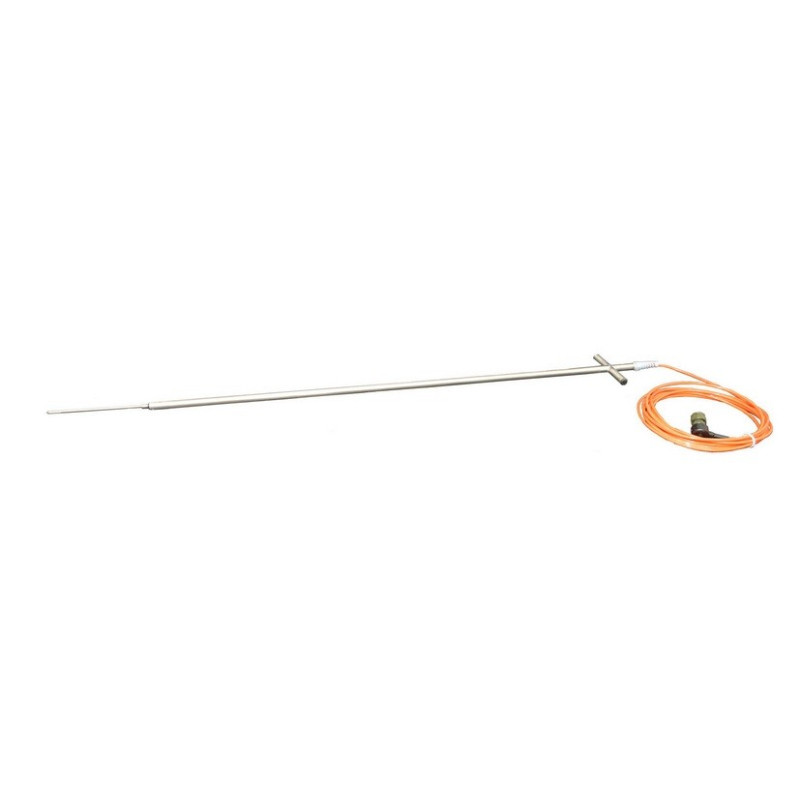
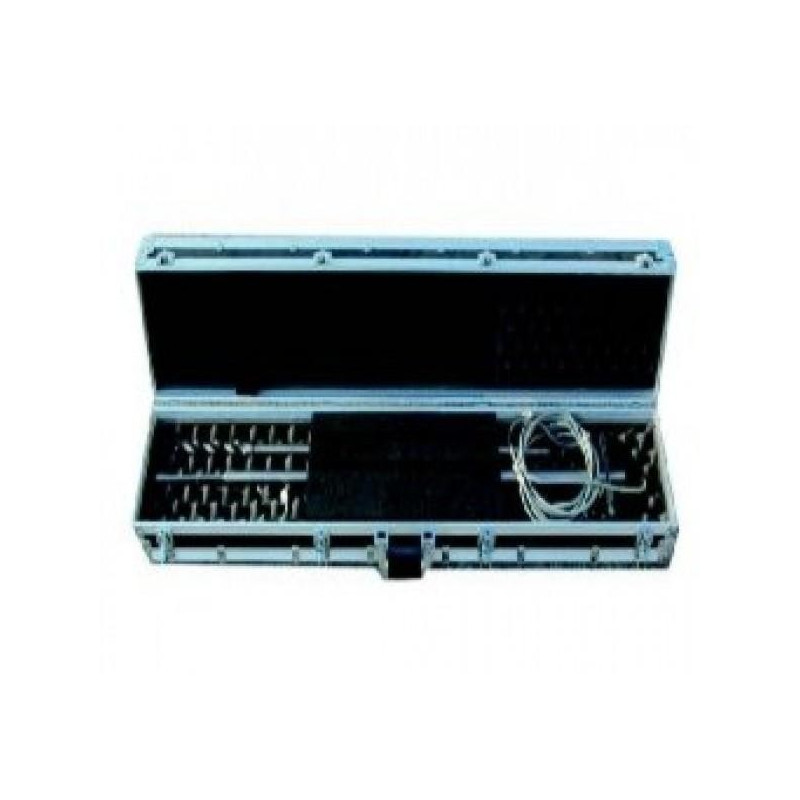
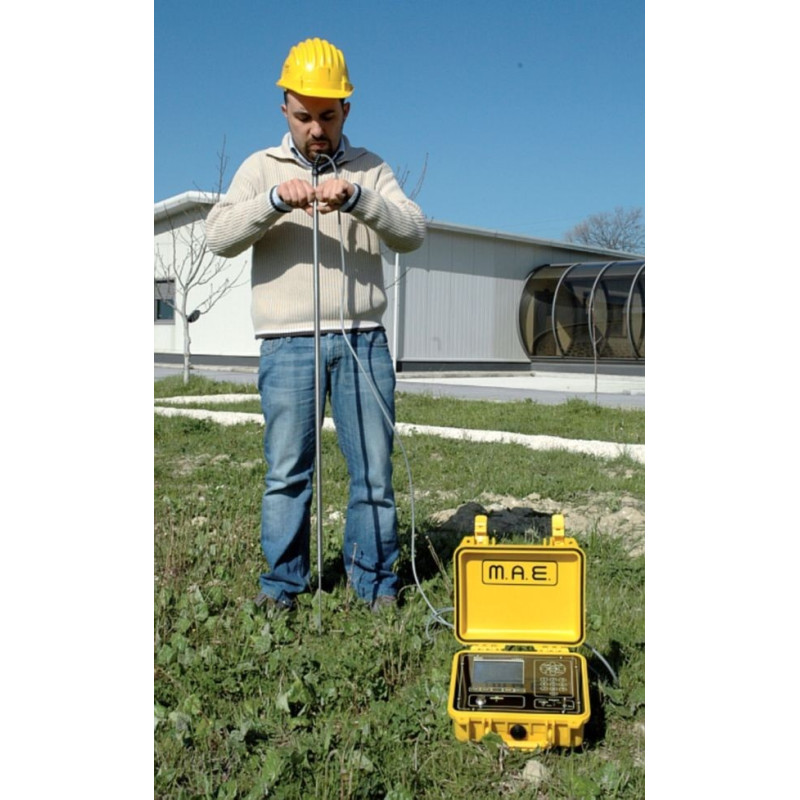
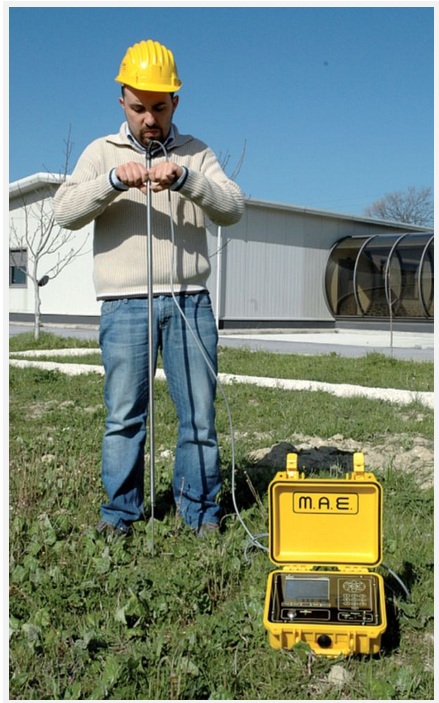
CTS120 is a probe to measure in soils, length: 120 cm, which allows to carry out practical and quick measurements of thermal conductivity (or thermal resistivity) in the medium in which it is inserted at a precise level.
Needle probe for measure of soil thermal conductivity, lenght: 120 cm.
CTS120 is a probe that measures in the soil (lenght = 120 cm), and offers the possibility to perform a practical and fast measurement of the thermal conductivity (or thermal resistivity) at a high accuracy level of the medium in which it is inserted.
In compliance with the ASTM D 5334-00, D 5930-97 and IEEE 442-1981 standards, the probe has proven its suitability for soils, thermal backfill materials, sediments, foodstuff, powders, sludges, paints, glues and various other materials.
The Non-Steady-State Probe (NSSP) measurement method (also known as transient line source, thermal needle, hot needle, heat pulse- and hot wire technique) has the fundamental advantages that it is fast and absolute while the sample size is not critical.
Hukseflux is specialised in NSSP design. Special models have been developed for in-situ field experiments.
CALIBRATION - ISO 9000:
The verification of the stability of the total probe can be done by repeated (yearly) testing in glycerol, preferably at several temperatures. Alternatively Calibration Reference Cylinders (CRC) traceable to NPL is available optionally.
CTS120 is suitable for use by ISO certified labs
Dimensions: 16x1200 mm
Weight: 1200 g
Sensing element: TP09
Housing material: Stainless steel
Sealing: Welded hermetic
Electrical connector and cable: Amphenol 10 poles with 5 meters of cable
Calibration result:
Eletrical resistance/meter: Re=84.98Ω/m
Calibration uncertainty: ±0.85Ω/m
Measurement process:
Metrological characteristic: Re in (Ω/m): sensitivity to electrical resistance.
Calibration method: Hukseflux TNC.
Uncertainty of the method: The expanded uncertainty is ±1%.
Metrological traceability:
Calibration traceability: Traceability of calibration is to th SI units of m and the derived SI unit of Ω.
Calibration hierarchy: From SI through international standards.
Evaluation of the uncertainty of the calibration result:
Uncertainty calculation: Based on nominal values and rectangular distribution, K=2 (GUM)
Ground thermal conductivity:
The measurement method is based on the unstable sensor technique, that uses a probe (also called thermal needle), which mounts a heating wire and a temperature sensor. The probe is introduced in the ground. From its response when subject to a heating cycle for a few minutes, it is possible to calculate the thermal resistivity (or its opposite, the heat transmission).
The principle of this measurement technique is based on a peculiar characteristic of a rectilinear heat course (the heating wire of the probe). After a short transitional period, the increase of the temperature depends only on the heating power and heat transmission of the medium. Once the first is known, the second can be calculated. The main applications of the technique consists in the testing of high voltage cables and heating ducts.
.jpg)


You might also like