

- Home
- Who We Are
- Products
-
Brands
-
Products by Measure
- Vibration Analyzers
- Peristaltic Pumps
- Airflow
- CO Carbon Monoxide
- Geiger counters
- Destiladores
- Spectrophotometry
- Sterilization
- Fluorescence
- GEOTECHNICS
- Soil Moisture
- Leaf area index
- Rain Gauge
- Meteorology
- Water Level
- O2 Oxygen
- pH
- Differential Pressure
- Radiation
- Salinity/Conductivity
- Telemetry
- Air Speed
- Relative Humidity
- Veterinary
- FUEL CELL HARDWARE
- Network Analyzers
- Calibrators
- WATER FLOW
- Color / Colorimeter
- Particle Counters
- Wind Direction
- Spectrometry
- Evapotranspiration
- Photosynthesis
- Cracks in Buildings
- Pipes Inspection
- Quantum Light
- Movement & GPS
- Diesel Level
- Oxígeno Disuelto DO
- Atmospheric Pressure
- Radon
- Sap/Sap Flow
- Temperature
- AIR QUALITY
- Ammonia
- Chlorophyll
- Conductivity in Soil
- Dendrometers
- Electrochemistry
- Spectroradiometry
- Pharmacy & Medicine
- GAS (ANALYZERS)
- Leaf Wetness
- Idc (DC Current)
- KW & KW/H
- PAR Light
- Nitrate
- Occupation and Time
- Particle Meters
- Soil Water Potential
- Pulses
- Flavor/Taste/Acidity
- Sodium
- Turbidity
- VOC
FCJJ-30 Electric Mobility Experiment Set
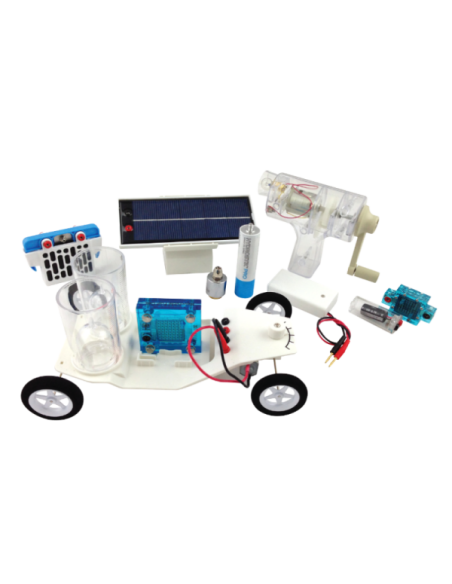
STEM kit for comparing six propulsion systems on one chassis: hydrogen fuel cell, salt water fuel cell, solar power, supercapacitor with hand crank, hydrogen cartridge and battery. Includes 14 experiments, full teaching guides and analysis of each solution’s strengths and limitations.
Overview
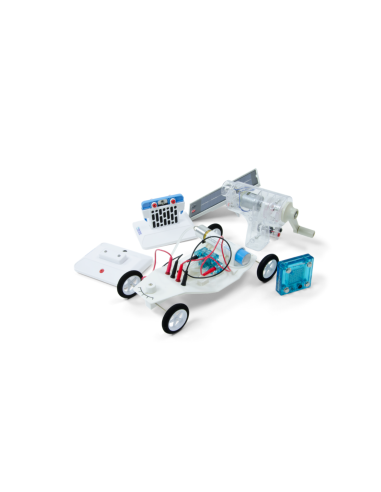
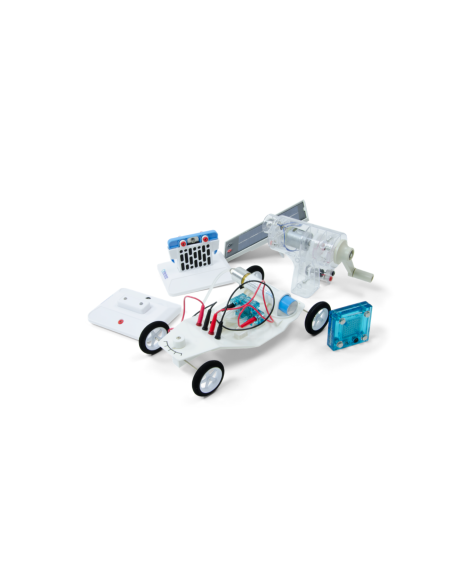
The FCJJ-30 Electric Mobility Experiment Set is an educational lab for studying how different energy sources can power an experimental vehicle. A single chassis can be assembled into 6 configurations to compare performance, autonomy, response and efficiency.
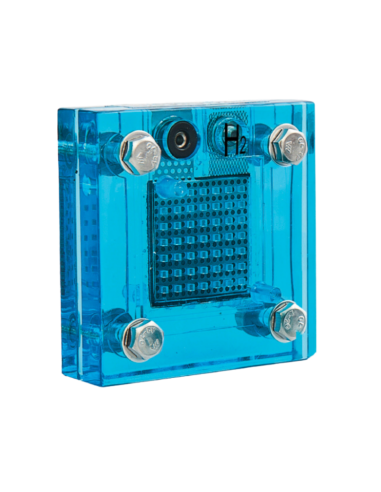
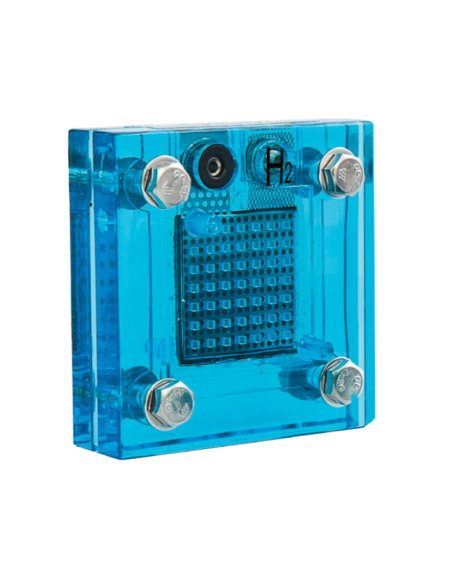
- Power a car with a hydrogen fuel cell using a reversible and mini fuel cell.
- Power a car with a salt water fuel cell.
- Power a car with solar energy.
- Power a car with a supercapacitor and hand crank.
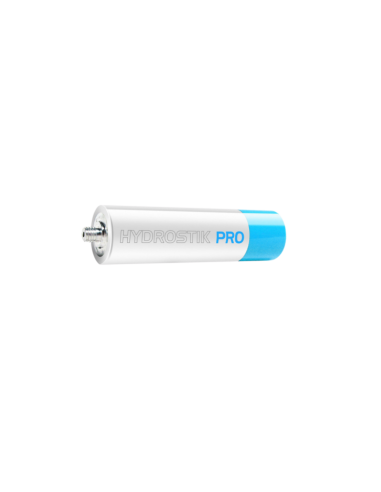
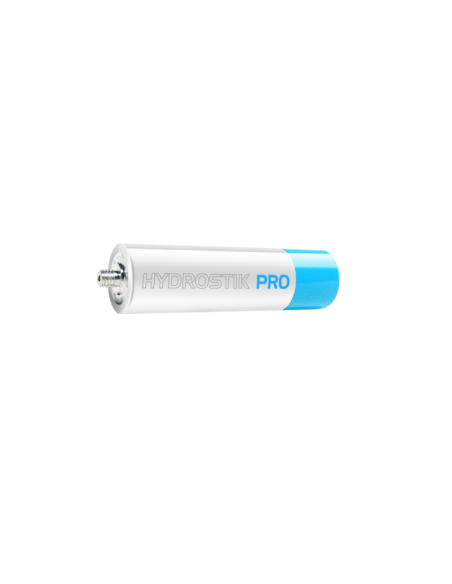
- Power a car with different forms of hydrogen: gas and Hydrostik Pro cartridge.
- Power a car with a battery.
The set helps students evaluate the strengths and weaknesses of each energy solution and is compatible with other Horizon kits for measurement, data logging and expanded experimentation. The vehicle also includes a fixed front steering function.
Educational use
It is designed for middle school and high school STEM programs focused on energy, sustainable mobility, electrochemistry and electric circuits. Students can build, power and compare each model while recording experimental results.
Hydrogen option requirement
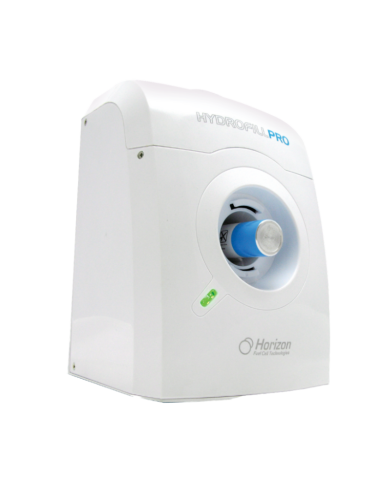
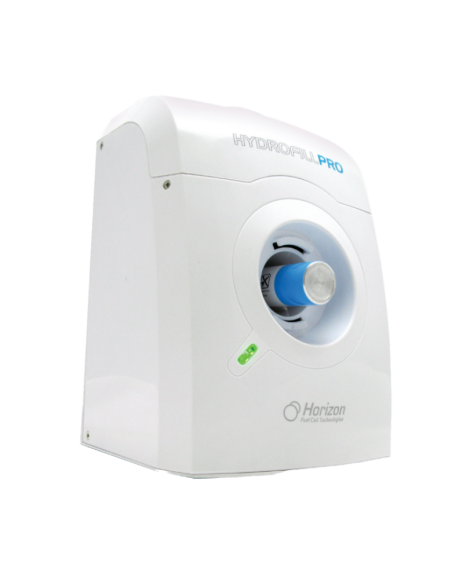
To recharge the supplied Hydrostik Pro cartridge with hydrogen, an external hydrogen source such as Hydrofill Pro is required.
Horizon Energy curriculum
Beyond the hardware, the set includes hands-on lab activities, a teacher’s guide and a student’s guide with complete instructional support.
Technical specifications
| Reference | FCJJ-30 |
| Manufacturer | Horizon Educational |
| Number of experiments | 14 |
| Lesson time | 9-17 hours |
| Teacher’s guide | 146 pages |
| Student’s guide | 110 pages |
| Models per chassis | 6 configurations |
| Chemistry concepts | Electrochemistry, electrolysis, hydrogen generation, redox reactions, solution concentration |
| Physics concepts | Capacitors, classical mechanics, current/voltage, series and parallel circuits, Ohm’s law, generators, electric power |
| Earth science concepts | Climate change, renewable energy, human impacts |
Key features and contents
- Comparison of six propulsion technologies on one platform.
- Experimental evaluation of performance and efficiency.
- Compatibility with Horizon measurement and data logging systems.
- Fixed front steering function on the vehicle.
- Includes Hydrostik Pro cartridge for hydrogen experiments.
Troubleshooting
- If the vehicle does not run on hydrogen, it may need a small initial flick by hand.
- Recharge the Hydrostik Pro cartridge fully before each test.
- Purge a small amount of hydrogen if performance drops.
- Make sure the cartridge is tightly connected to the pressure regulator.