Shopping Cart


- New

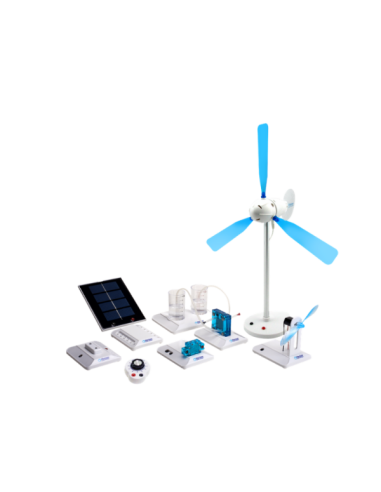
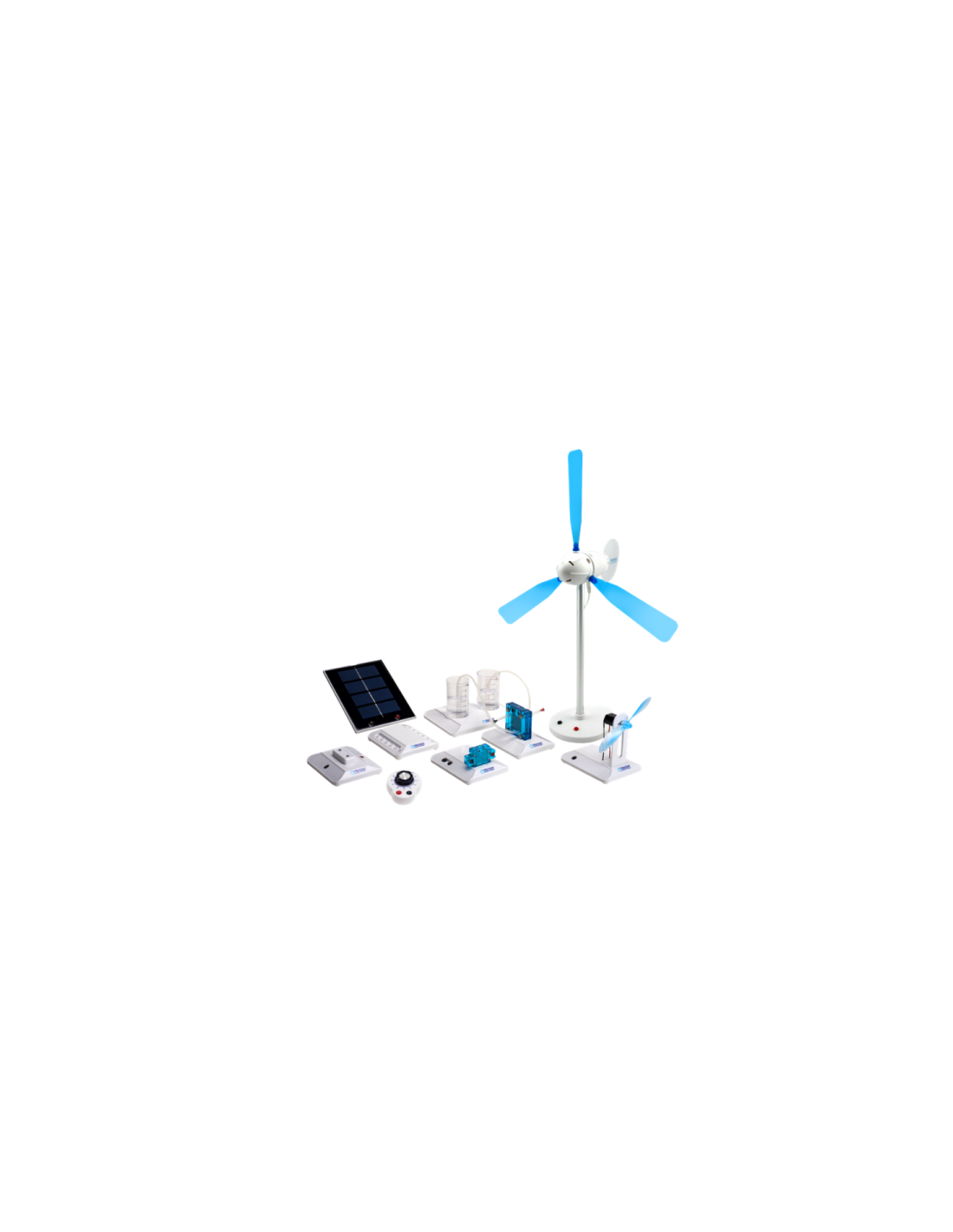
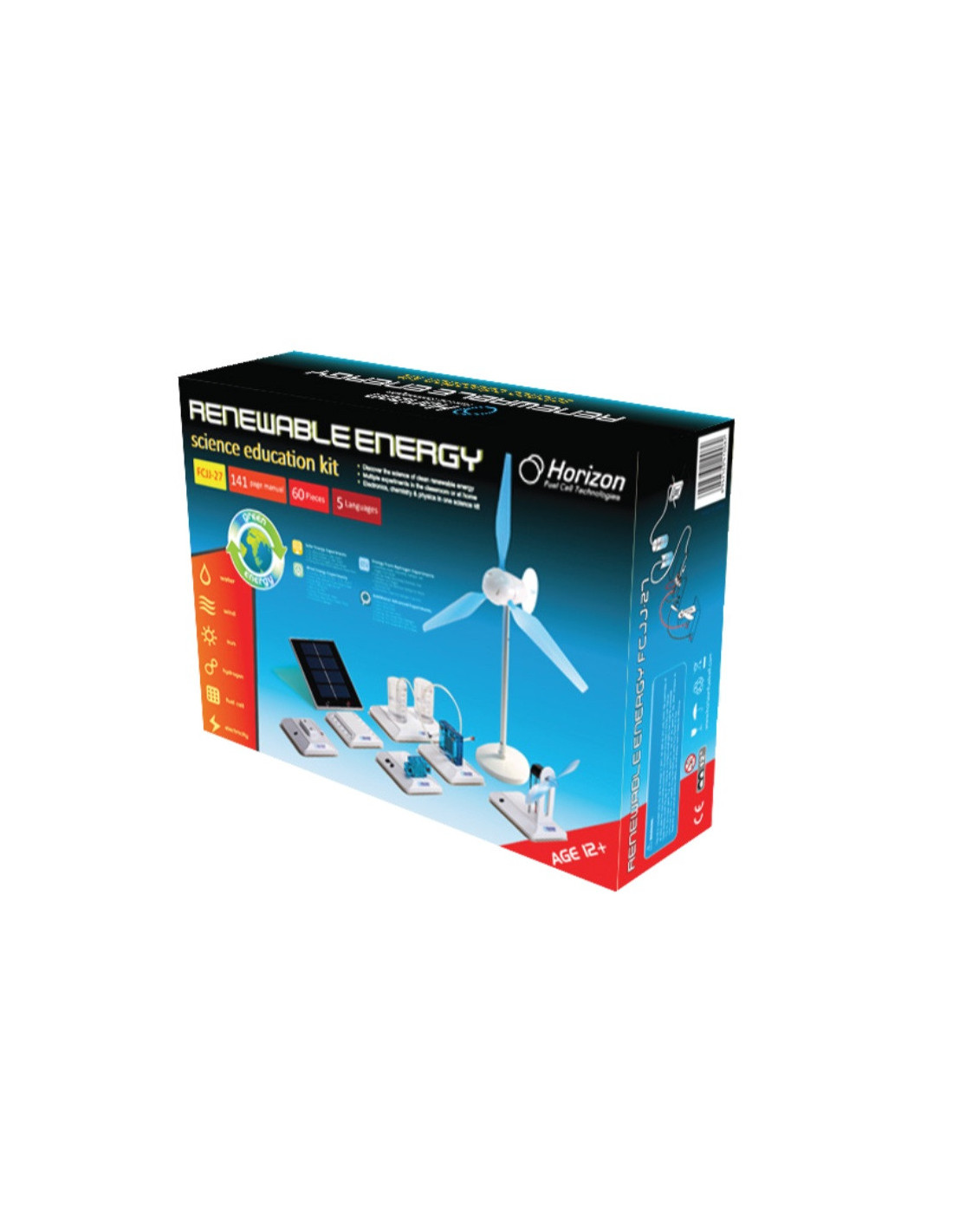
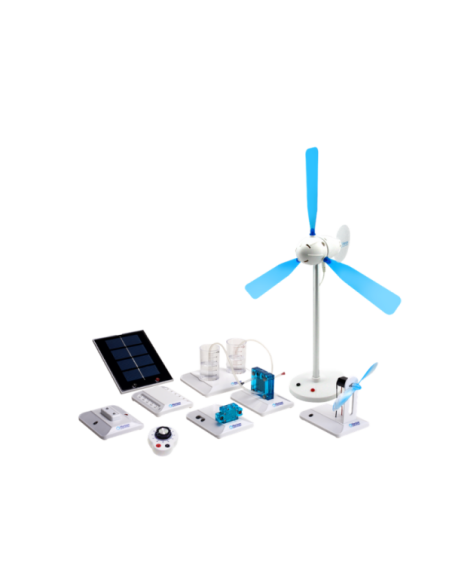
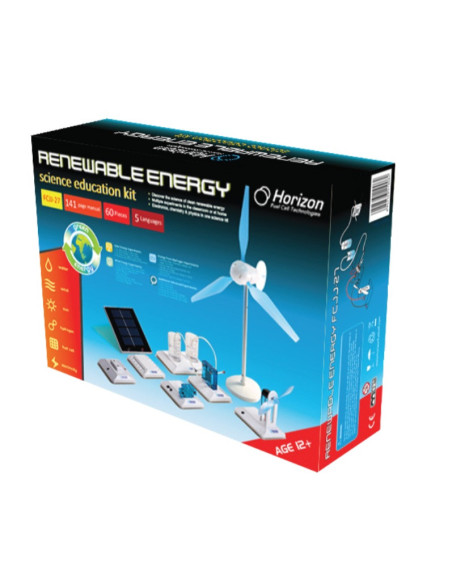
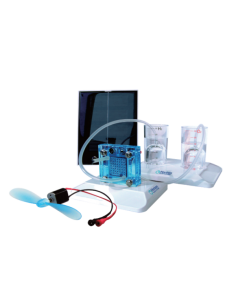
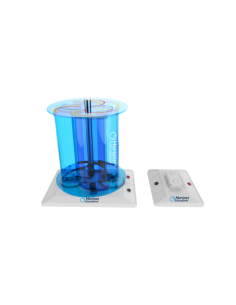
FCJJ-37 educational kit exploring solar and wind energy, electrolysis, hydrogen and PEM fuel-cell technology.
The FCJJ-37 kit demonstrates a clean-energy system on a miniature scale. Power circuits with a solar panel or wind turbine with NASA-aerodynamics profiled blades.
Generate hydrogen through water electrolysis and convert it into electricity with a PEM fuel cell. It includes hands-on activities about renewable microgrids and clean generation, with materials for up to 10 class periods.
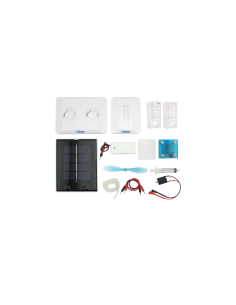
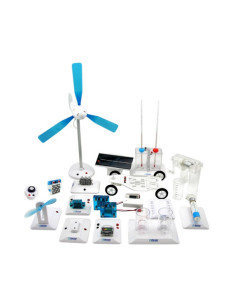
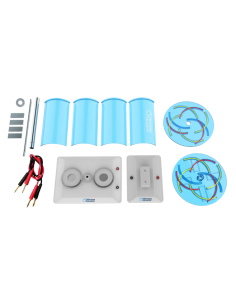
Includes 16 experiments with solar panel, wind turbine, electrolyzer, PEM fuel cell, LED, fan, motor, hydrogen production and battery pack, plus teacher and student guides, tanks, circuit modules, 1 W solar panel, tubing, leads, battery, syringe and instructions.
Renewable energy is transforming not only the energy industry but also the way science is taught in classrooms worldwide. These technologies provide an excellent opportunity to inspire students to explore new fields of scientific discovery while introducing fundamental scientific principles through innovative, hands-on learning methods.
Below are some of the key benefits of integrating renewable energy technologies into educational curricula.
Major industrial nations already generate a significant proportion of their energy from renewable sources, with countries such as Germany and the United Kingdom actively expanding electricity generation through alternative energy technologies.
Electricity networks in major cities are increasingly incorporating microgrids and smart grids, enabling the integration of renewable energy sources while improving energy distribution, management and efficiency.
Furthermore, leading automotive manufacturers such as Hyundai, General Motors and Toyota, alongside innovative companies such as Arcola Energy, are developing electric vehicles and hydrogen fuel cell propulsion systems, including hybrid solutions.
Both the European Union and several US states, including California, are promoting the development of alternative fuel and hydrogen refuelling infrastructure. Meanwhile, in countries such as India, the telecommunications industry is increasingly adopting renewable energy solutions to improve the reliability and continuity of its electricity supply.
Renewable energy technologies are becoming an integral part of our everyday lives and play an increasingly important role in modern society. As a result, they provide an exceptional educational opportunity to demonstrate the practical application of scientific knowledge in real-world situations, helping students understand the connection between science, technology and sustainable development.
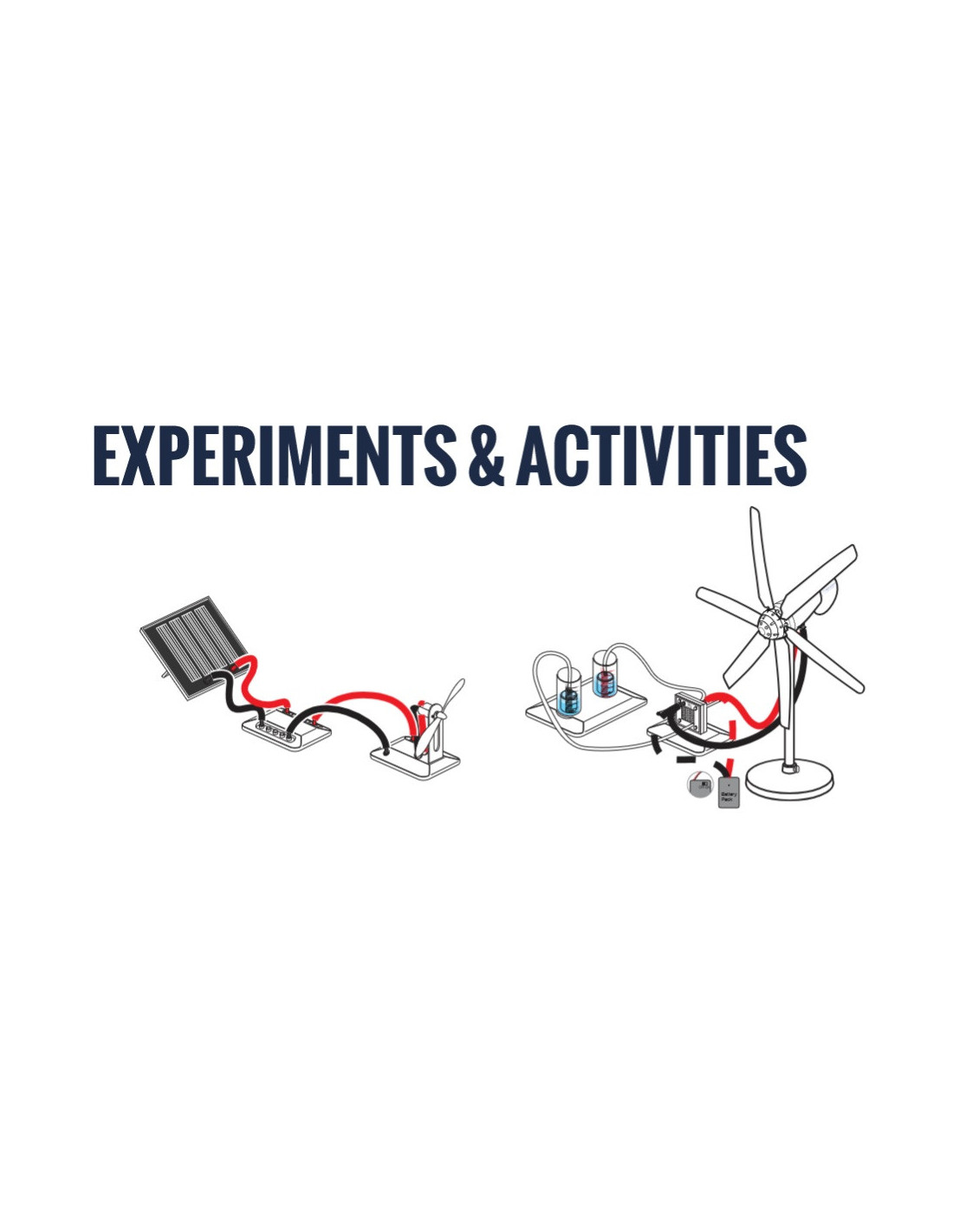
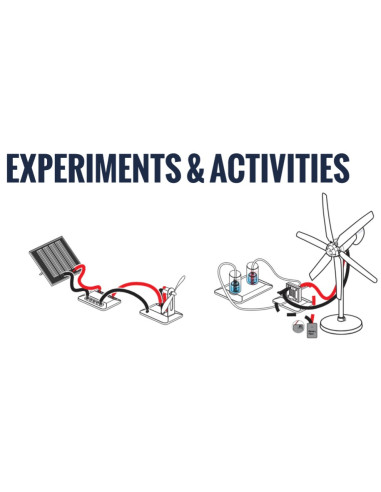
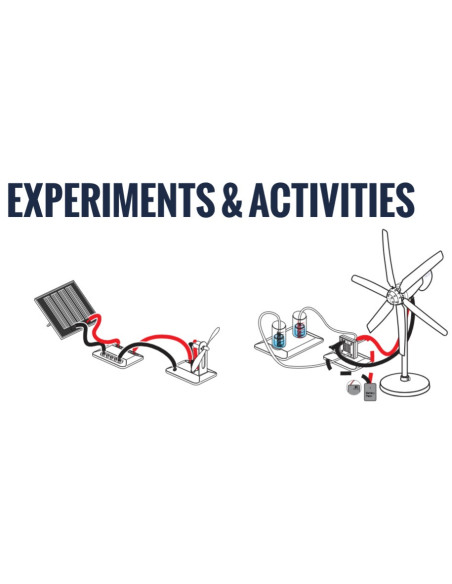
Experiment 1: Using a solar panel to power the LED module.
Experiment 2: Using a solar panel to power the fan or wheel motor module.
Experiment 3: Preparing the electrolyzer module and producing hydrogen using solar energy.
Experiment 4: Using a PEM fuel cell to power the LED module.
Experiment 5: Using a PEM fuel cell to power the electric fan module.
Experiment 6: Using a PEM fuel cell to power the motorized wheel module.
Experiment 7: Using a PEM fuel cell to simultaneously power the fan/wheel motor module and the LED module connected in parallel.
Experiment 8: Using a wind turbine to power the LED module.
Experiment 9: Preparing the electrolyzer module and producing hydrogen using wind energy.
Experiment 10: Using a battery pack to perform electrolysis when solar or wind energy is unavailable.
Electrolysis, Energy, Hydrogen Production, Reaction Rates, Chemical Reaction Yield, Chemical Reactions, Oxidation-Reduction (Redox) Reactions, Semiconductors, Stoichiometry.
Angular Velocity, Classical Mechanics, Energy Efficiency, Electrical Circuits, Energy, Ohm's Law, Parallel Circuits, Electrical Power, Rotational Mechanics, Series Circuits.
Climate Change, Renewable Energy, Environmental Impact of Human Activities.
Teaching renewable energy not only introduces students to innovative methods of energy generation but also provides an excellent opportunity to explore fundamental scientific principles.
Renewable energy technologies offer a practical demonstration of the principle of energy conversion, illustrating how energy from wind or sunlight can be converted into electrical energy or stored in the form of hydrogen.
Closely related to this is the principle of energy conservation. Renewable energy systems provide students with valuable opportunities to measure and analyse energy losses during conversion and storage processes, helping them understand energy efficiency.
Furthermore, Horizon Educational kits include propellers, electric motors and LED modules that enable students to explore basic electrical circuits and demonstrate the operation, performance and efficiency of renewable energy systems through hands-on experiments.


You might also like