Shopping Cart


TRAINING & EDUCATION SYSTEMS

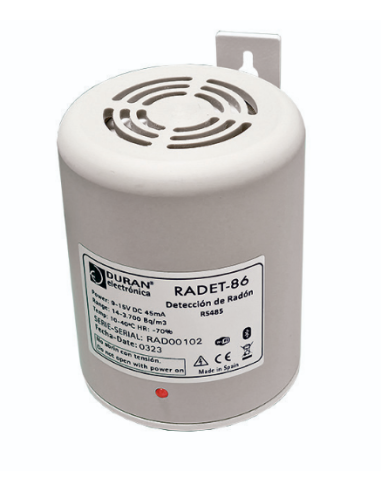
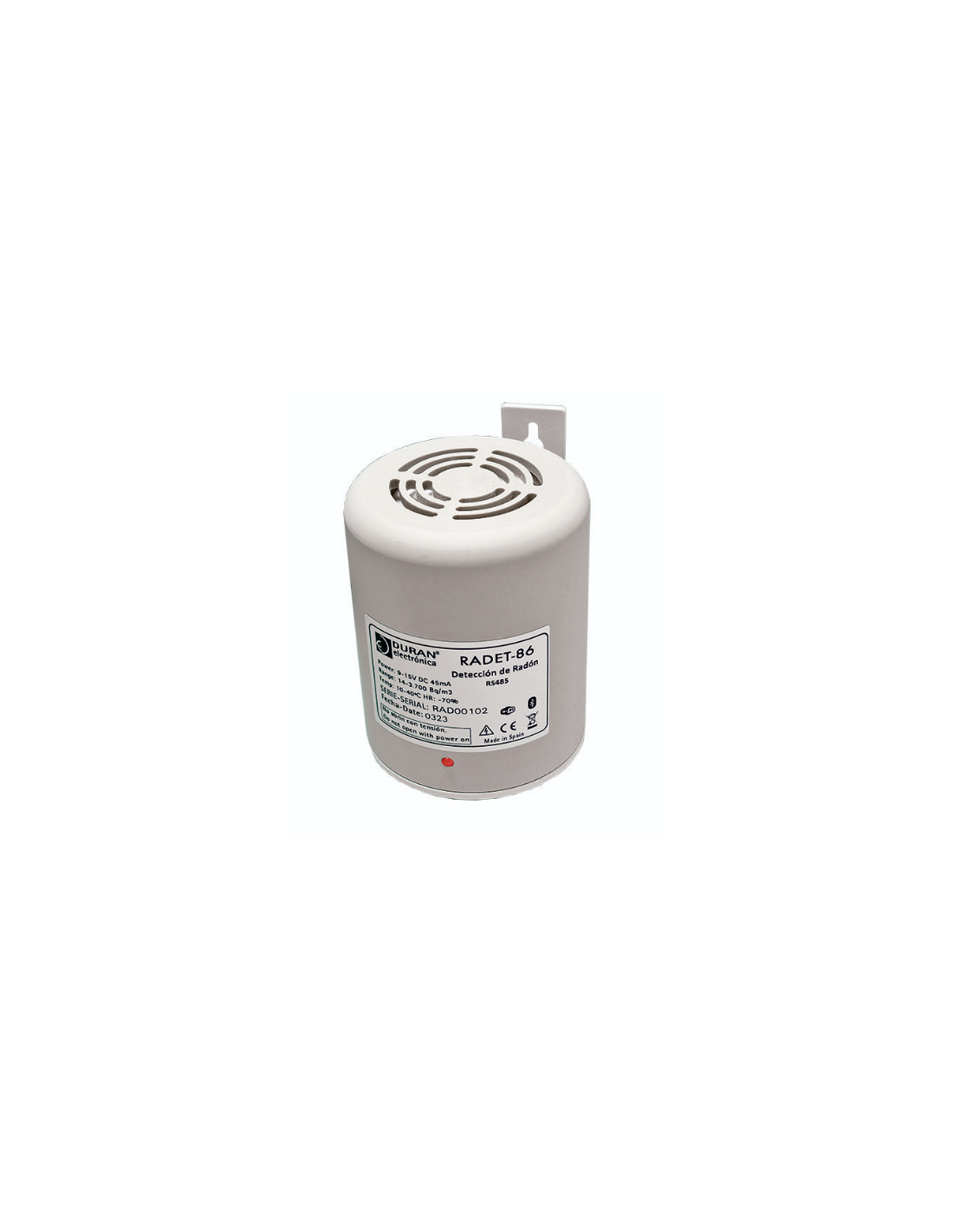
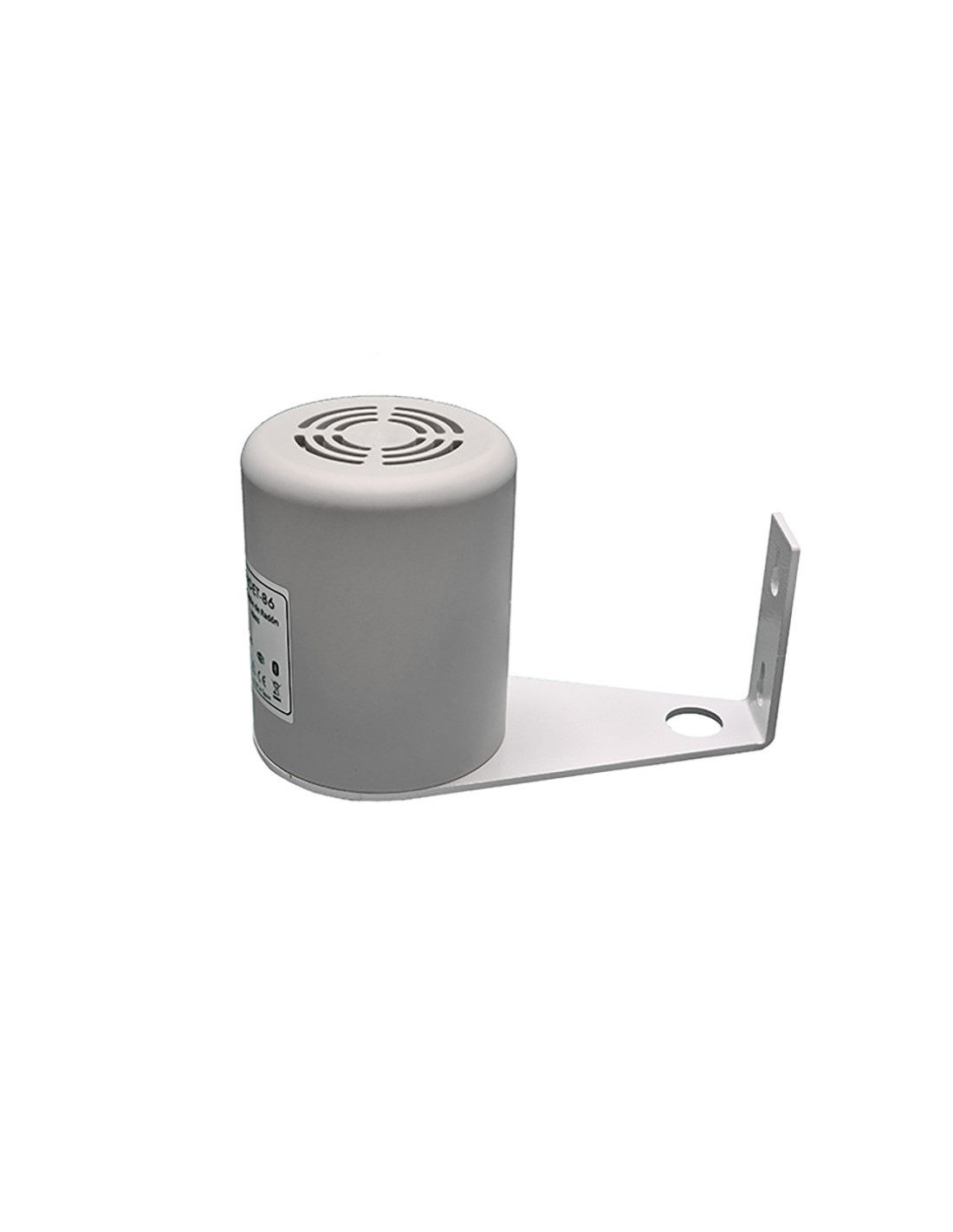
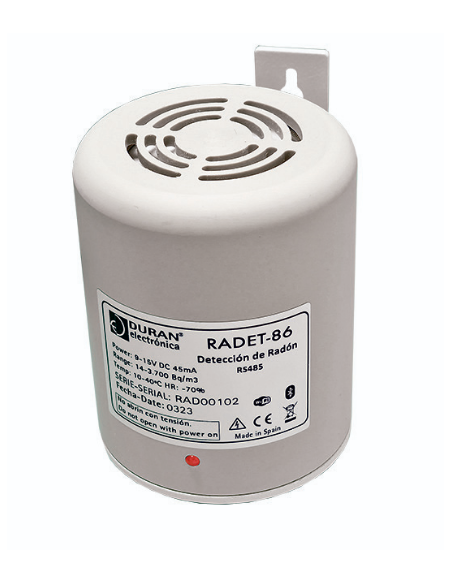
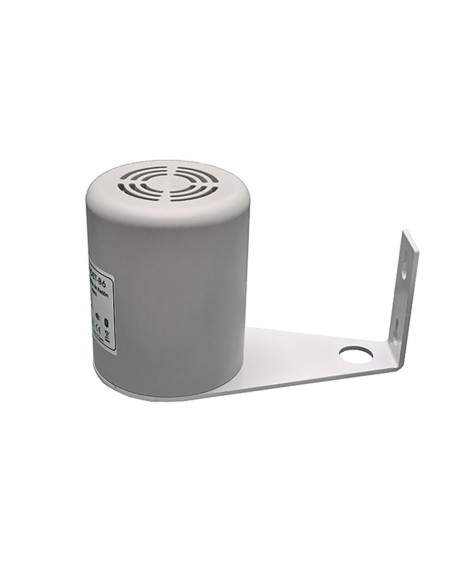
DURAN ELECTRÓNICA has developed the RADET-86, which uses an ion pulse chamber and a microprocessor to detect alpha particles generated by this gas and display the concentrations present in the environment.
It also has a memory that continuously stores the concentrations obtained with the date and time for up to one year, for later analysis.
Radon is an odorless and colorless gas that occurs naturally, primarily through the radioactive decay of uranium present in soil and rocks. However, it can also be present in building materials (concrete, bricks, and natural stone) and in water from wells, emitting alpha particles and decaying into polonium and lead.
The main routes of entry of this gas into buildings are through cracks, joints, sinks, drains, gaps around pipes, cables, or simply through the porosity of the various materials used in construction.
The highest concentrations are detected in basements and cellars, especially the deeper the building is in relation to ground level.
The unit of measurement in Europe is the Becquerel (Bq/m3) and in the Americas, the Picocurí (pCi/l). Continuous exposure to this gas increases the risk of some types of cancer, especially lung cancer, genetic defects, and blood disorders.
The WHO has included it on the list of Group 1 carcinogens. The Nuclear Safety Council (CSN) safety guide GS 11-02 recommends a reference level of 300 Bq/m3 as an annual average.
Furthermore, pending the transposition of European Directive 2013/59/Euratom, it invites member states to use this same reference level for workplaces and homes.
The WHO recommends a maximum continuous reference exposure level of 100 Bq/m3 to minimize health risks. This is a reference level, not the permissible limit, but rather a value that is not recommended to exceed, considering that it is harmful to health depending on the exposure time.
The decay period of radon is between 3 and 4 days, and the best solution to eliminate it once detected is to properly ventilate the room by opening doors and windows or using mechanical extraction.
Operating Technology: Pulsed Ionization Chamber and Microprocessor
Supply Voltage: 9-24V DC
Maximum Power Consumption: ±150mA in standalone mode, 12VDC relay ON
Communication Types/Distance: RS485 proprietary protocol / 1000m connection to DURGAS control panels
ModBus RTU
Standalone Mode: 2.4MHz Wi-Fi - Bluetooth: Standalone Mode
Measuring Range/Accuracy: 14-3700 Bq/m³ ±10 Bq/m³
Optimal Measurement Stabilization Time: Approx. 1 h
Data reading and storage rate: Every 10 minutes in Mode 1 and every hour in standalone Mode 2.
Factory default levels for Modes 1-2: 150 Bq/m³ local relay + 100 Bq/m³ optical warning.
Programmable levels in the DURGAS control panel: Up to 3, in steps of 20 Bq/m³ up to 2,000 Bq/m³.
Factory default programmed levels: 100 Bq/m³ (Vent1) - 150 Bq/m³ (Vent2) - 200 Bq/m³ (Alarm).
Data storage: Up to 1 year.
Data output and event memory: Built-in web gateway.
Operating range: 10°C - 50°C / RH < 80%
Exterior LED status indicator: RGB according to codes.
Minimum - maximum recommended height: Minimum 1.5 m. Maximum height 1.70 m from the ground
***Option 2 control output: Local relay with voltage-free contacts C-NO 3A 230 V AC
Option 1 control output: Up to 3 C-NO-NC relays. Programmable at the control panel.
**Approximate coverage or reference: 50/75 m² or according to local regulations.
**Cable type and input: 4-wire shielded conduit: 2 x 1.5 mm + 2 x 0.8 mm² twisted pair / via PG9 cable gland.
Weight and dimensions: ± 400 g, 90 x 110 mm cylinder with support.