Shopping Cart
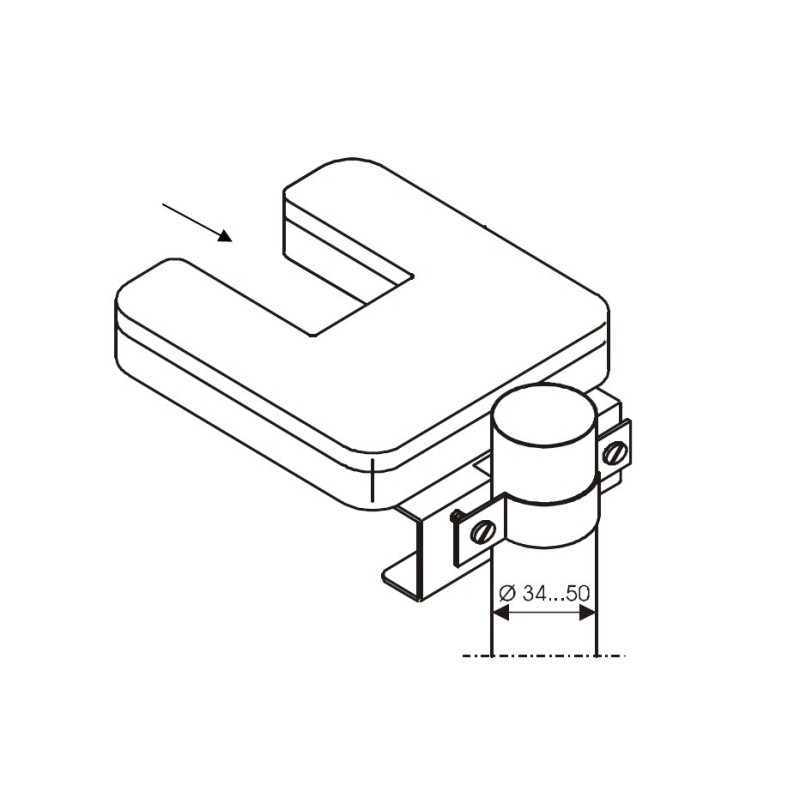
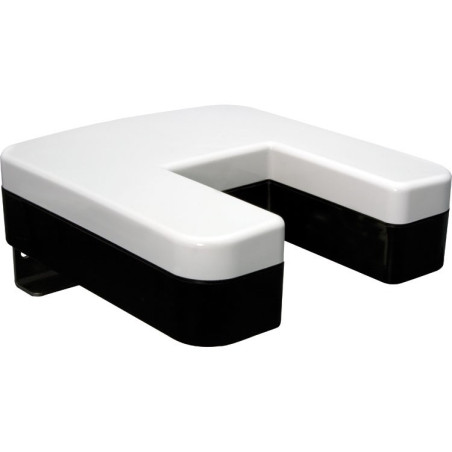



The precipitation monitor transmits signals to determine the beginning and the end of precipitation and the duration of the period of precipitation as required by meteorological services.
In addition, the precipitation monitor can be used to report status or to transmit control signals to connected rain protection devices such as windows, air vents, awnings, or Venetian blinds.
Precipitation in the form of drizzle, rain, snow or hail is detected by means of a light barrier system and triggers a signal. A built-in incidence-filter shall smooth the triggering of switching signals in case of individual incidences, as for example leafs, bird droppings, insects etc. For this, a certain number of at least n incidences should have occurred within a time-window of 50 sec. The number of drop incidences (1…15) can be selected through the DIP-switch on the pc-board.
With the precipitation end the switching signal is reset after a selectable switch-off delay. Thanks to the immediate evaluation of the incidences it is possible to determine precisely the beginning and end of the precipitation period.
The instrument is equipped with a heating system for extreme weather condition. This avoids ice and snow forming on the housing surface. In addition, the surface retains a temperature of > 0° by means of a regulated heating.
| Measuring principle | infrared light barrier |
|---|---|
| Measurement range precipitation | status of precipitation (rain, snow, hail, etc.) |
| Switch-on condition | 1...15 incidences within 50 sec. |
| Switch-on delay | none |
| Sensor area | 25 cm² |
| Drop size | > 0,2 mm |
| Supply voltage | 24 V AC/DC (±15%) |
| Current consumption | ca. 300 mA at 20°C ambient temperature; max. approx. 1 A |
| Alarm output | precipitation = relay OFF ( also at UB = 0); no precipitation = relay ON |
| Switching load (relay) | max. 230 V AC/DC; 4 A |
| Switch-off delay | 25...375 s |
| Electrical connection | 5-polige terminal block and PG cable clamb (cable 5X0,5mm² LI9YC11Y black not included) |
| Weight | ca. 400 g |
| Protection type | IP65 |
| Approvals | CE, EAC, RoHS |
You might also like