Shopping Cart



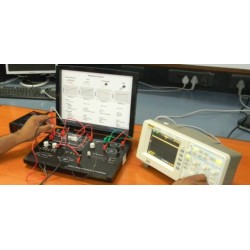
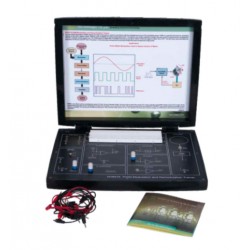
MTS-887. PIC16F Training Lab which uses Microchip's PIC16F887 is a 8-bit microcontroller to implement various I/O control experiments. This controller contains most of the powerful functions in modern MCUs nowadays.
It can be used for automation, motor control, measurement of devices and mechanical controls, etc. PIC16F is popular and known because of its economical price, broad applicability, high access and reliable stability.
MTS-887 contains several peripheral devices from basic LED to advanced capacitive sensing module. The integration of these devices enable end users to create and implement different kind of control experiments. Together with our user friendly experiment manual, end users can learn the control of PIC MCU more conveniently and efficiently.
01. The trainer uses PIC16F887 microcontroller chip which is ideal for beginners to learn programming language.
02. Each experimental block adopts individual control switch to avoid interference if sharing pin.
03. Pins of the microcontroller have been connected to the peripherals of the interior. There is no need to connect it manually.
04. “Reset” button: reset the chip if errors occur.
05. Development interface reserved for advanced learning can connect the external modules to the chip pins.
01. Basic I/O control
02. External interrupt I/O experiment
03. Chip clock
04. Watchdog timer
05. Timer
06. UART
07. I2C
08. LCD module experiment
09. Temperature measurement experiment
10. LED matrix display experiment
11. Stepping motor experiment
12. Capacitive touch sensing experiment