


- Home
- Who We Are
- Products
-
Brands
-
Products by Measure
- Vibration Analyzers
- Peristaltic Pumps
- Airflow
- CO Carbon Monoxide
- Geiger counters
- Destiladores
- Spectrophotometry
- Sterilization
- Fluorescence
- GEOTECHNICS
- Soil Moisture
- Leaf area index
- Rain Gauge
- Meteorology
- Water Level
- O2 Oxygen
- pH
- Differential Pressure
- Radiation
- Salinity/Conductivity
- Telemetry
- Air Speed
- Relative Humidity
- Veterinary
- FUEL CELL HARDWARE
- Network Analyzers
- Calibrators
- WATER FLOW
- Color / Colorimeter
- Particle Counters
- Wind Direction
- Spectrometry
- Evapotranspiration
- Photosynthesis
- Cracks in Buildings
- Pipes Inspection
- Quantum Light
- Movement & GPS
- Diesel Level
- Oxígeno Disuelto DO
- Atmospheric Pressure
- Radon
- Sap/Sap Flow
- Temperature
- AIR QUALITY
- Ammonia
- Chlorophyll
- Conductivity in Soil
- Dendrometers
- Electrochemistry
- Spectroradiometry
- Pharmacy & Medicine
- GAS (ANALYZERS)
- Leaf Wetness
- Idc (DC Current)
- KW & KW/H
- PAR Light
- Nitrate
- Occupation and Time
- Particle Meters
- Soil Water Potential
- Pulses
- Flavor/Taste/Acidity
- Sodium
- Turbidity
- VOC
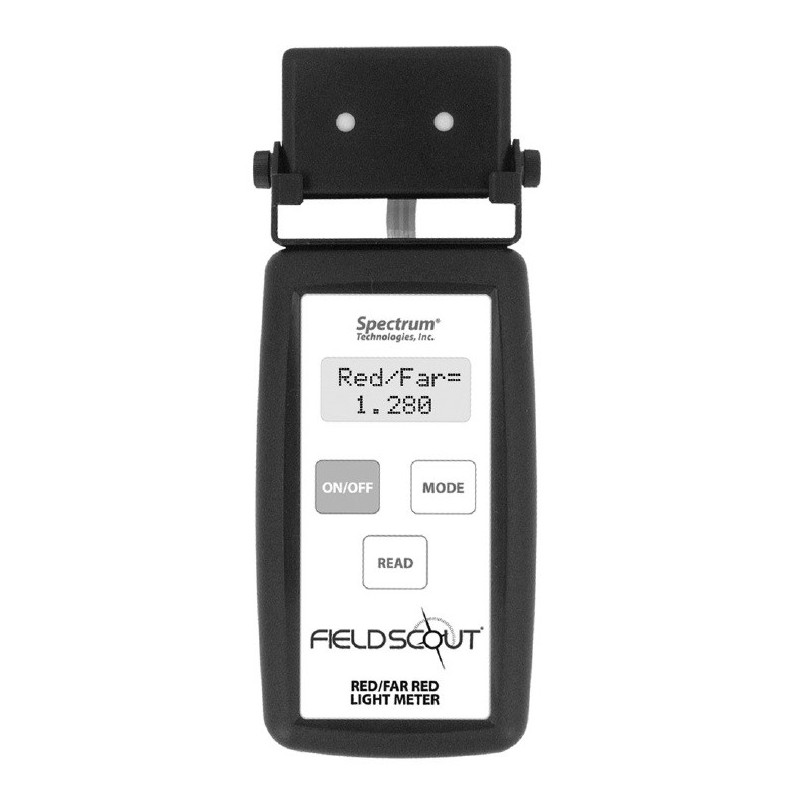
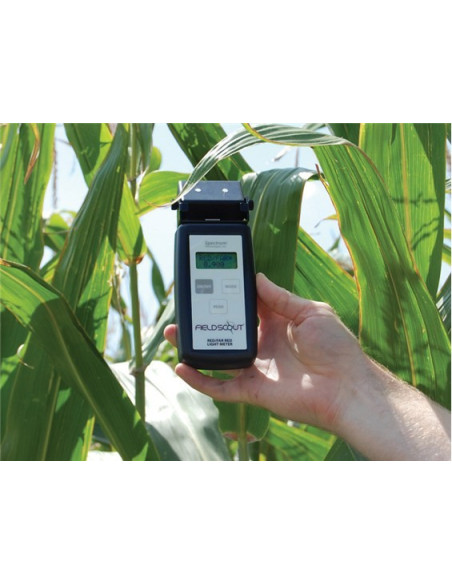
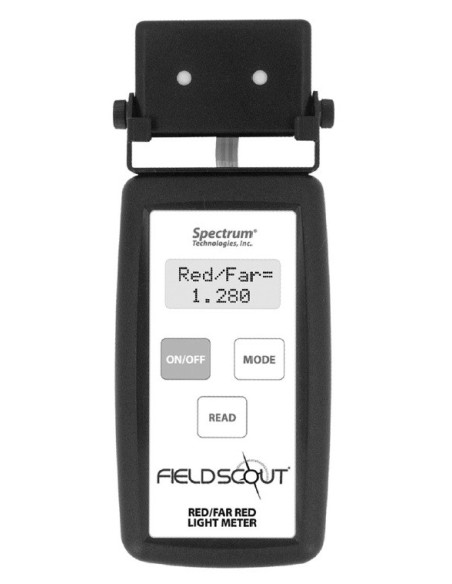
3412 LightScout Red/Far Red Meter
Knowing the ratio of red to far red can help you determine plant spacing and decide when to apply plant growth regulators. Greenhouses with a high canopy closure or canopy density may require more applications of plant growth regulators to maintain plants at commercial size.
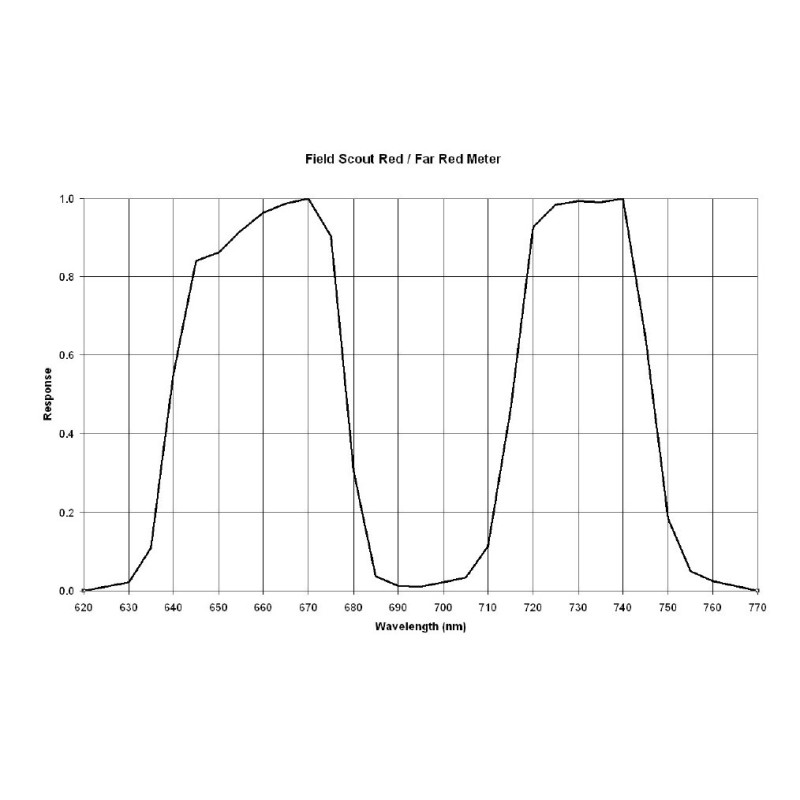
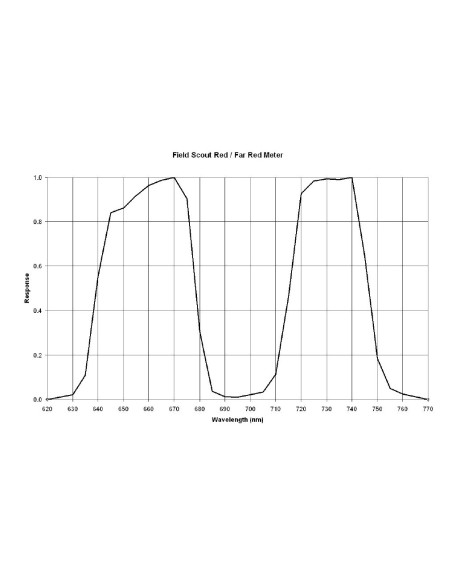
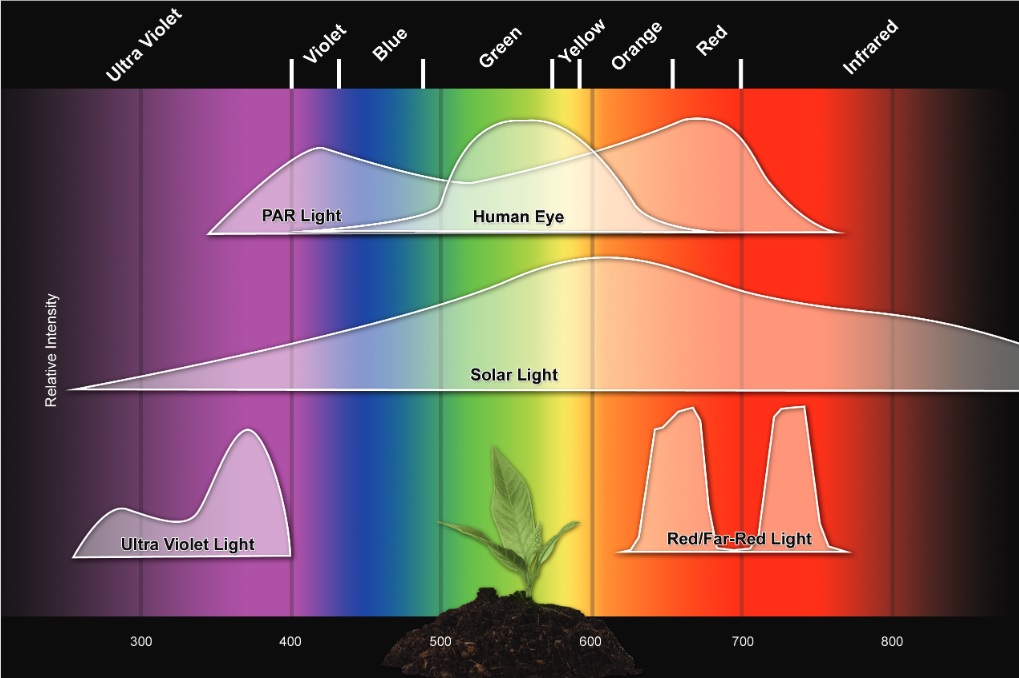
Plants absorb red light (660–680nm) and reflect far-red light (720–740nm). Plants contain phytochromes, photoreceptors that control physiological and developmental reactions to fluctuations levels of red and far-red light. Some responses that are regulated by phytochromes include germination, stem elongation, flowering, gene expression as well as leaf and chloroplast development.
Accuracy
The Field Scout Red / Far Red Meter is accurate to ±5%.
Red light is measured at 660nm, 40nm FWHM (±20nm).
Far Red light is measured at 730nm, 30nm FWHM (±15nm)